Marginalia Press → the library
All ebooks in the library
All 44 titles, grouped by the shelf they sit on. Open any one for what it promises, who it is written for, and what is inside it.
Take the whole thing
1,427 pages across 44 guides. Sold separately they come to $751.
Get Things Done
For the gap between deciding and doing. 6 guides, $75 $99 as a shelf. Open the shelf →
 Executive Functioning for the ADHD Brain
A Systems-First Life Guide
Executive Functioning for the ADHD Brain
A Systems-First Life Guide

You have not failed at productivity. You have been handed tools built for a brain that isn't yours. Seven executive-function domains, each rebuilt into systems engineered to need less willpower rather than more - and designed to survive being abandoned and picked back up, because they will be.
Written for: Adults with ADHD (diagnosed or suspected) who have repeatedly failed with neurotypical productivity tools
- 9 design laws
- 7 system domains
- 5 printable templates
- restart protocol
- quick-reference card
- graded source list p41-43
$19 · 43 pages · 10 citations · Ebook (printable templates) · on the Get Things Done shelf
Inside the book — 4 pages. Tap one to read it.
 How to Make Yourself Do Hard Things
Task aversion, implementation intentions, and the training of effort tolerance
How to Make Yourself Do Hard Things
Task aversion, implementation intentions, and the training of effort tolerance
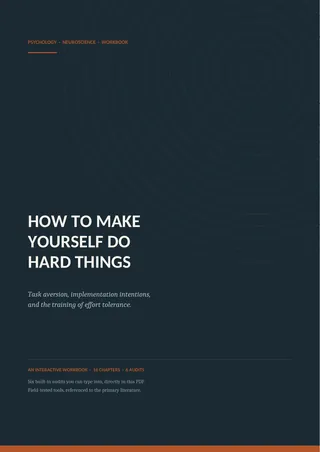
The task is not hard. Starting it is. This pre-decides the exact moment you act, so beginning stops requiring a decision you keep losing - then slowly trains down the felt cost of effort itself. 129 fillable fields; you do the work inside the file.
Written for: People whose avoidance is task-specific rather than global; explicitly routes clinical-level avoidance to a professional
- 16 chapters in parts I-III
- 6 live audits
- if-then forge
- WOOP sheet
- effort ladder
- ch14 on what the literature does NOT support
- troubleshooting index
$24 · 34 pages · 42 citations · Interactive workbook (fillable) · on the Get Things Done shelf
Inside the book — 3 pages. Tap one to read it.
 The Habit Architecture Workbook
Why your habits never stick - and the research-backed system to diagnose the broken part of your habit loop and rebuild it
The Habit Architecture Workbook
Why your habits never stick - and the research-backed system to diagnose the broken part of your habit loop and rebuild it
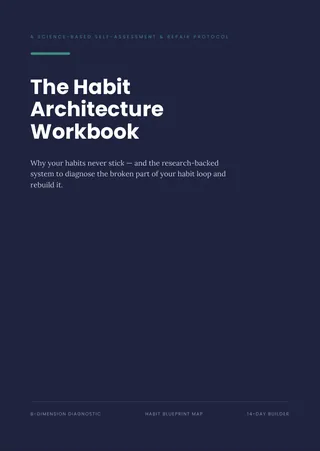
Your routines die in week three and you've concluded you lack discipline. You don't. A habit is a machine with eight parts. Find the part that actually broke, rebuild that one, and stop replacing the whole engine every January.
Written for: People whose routines repeatedly die within a few weeks and who have concluded the problem is their own discipline
- 32-question, 8-dimension assessment
- scoring table
- habit blueprint radar map
- 3 named failure profiles
- 8 rebuild techniques with sources
- 14-day builder grid
- source list p22
$14 · 22 pages · 15 citations · Ebook (print-and-write assessment + 14-day builder) · on the Get Things Done shelf
Inside the book — 2 pages. Tap one to read it.
 The Focus Sprint
90 Minutes of Deep Work
The Focus Sprint
90 Minutes of Deep Work
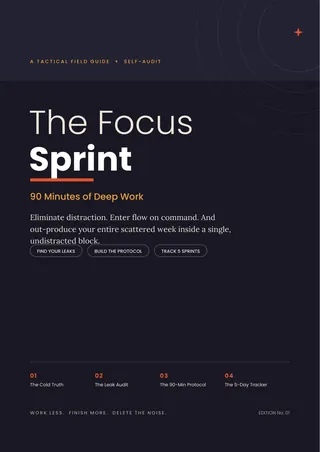
You sat down at nine with a clear plan. It's eleven, you were busy the whole time, and the one thing that mattered is untouched. Focus is a leaky bucket, not a character trait - find your specific leaks in a 20-item audit, then spend one protected 90-minute block on the plugged version.
Written for: Knowledge workers who sat down at nine with a clear plan, were busy the entire time, and at eleven have fourteen tabs open and the one thing that mattered untouched
- 20-item focus leak audit across 4 categories (environment, digital, mind & intention, body & energy)
- 0-20 scoring bands
- 3-phase protocol (5-min launch ritual, 90-min sprint, 15-20 min recovery)
- flow-trigger stack
- fillable Sprint Blueprint with pre-flight checklist and signature
- Distraction Parking Lot
- 4-way rescue troubleshooting
- 5-day sprint tracker
$14 · 10 pages · 8 citations · Interactive workbook (fillable) · on the Get Things Done shelf
Inside the book — 2 pages. Tap one to read it.
 The Identity Shift
A Guide to Becoming the Person Who Reaches the Goal
The Identity Shift
A Guide to Becoming the Person Who Reaches the Goal
You've started before. You meant it. You watched it dissolve, and someone told you the missing ingredient was discipline. It wasn't. Move the unit of change from the outcome to the person doing it, and let accumulated evidence do what willpower could not.
Written for: People who have started before, meant it, and watched the change dissolve - and who have been told the missing ingredient was discipline
- 11 chapters in 3 parts plus an opening
- three-layer model (outcomes / processes / identity)
- current-identity audit
- target-identity converter and three tests
- 4-step act-as-if protocol
- casting-votes model and the dip
- environment design
- daily identity rituals
- day-by-day 30-day runway
- 4 print-and-write worksheets p50-52
- closing word
$19 · 56 pages · 8 citations · Ebook (print-and-write worksheets) · on the Get Things Done shelf
Inside the book — 5 pages. Tap one to read it.
 The Morning Method
Assess your morning. Map your patterns. Rebuild it on evidence.
The Morning Method
Assess your morning. Map your patterns. Rebuild it on evidence.

Not someone else's 5am routine - yours, rebuilt on physiology. Score eight evidence-based dimensions, turn them into a map whose shape names your next fix, and walk away with a protocol for the two or three that are actually broken.
Written for: People who want the first hour rebuilt on physiology rather than on someone else's routine - explicitly asked to answer for the morning they actually have this month, not the one they wish they had
- 8 dimensions x 3 questions (0-3 each, 9 per dimension, 72 total)
- a science note and a reflect prompt per dimension
- score summary table
- Morning Routine Map radar
- 4 interpretation bands plus a shape-beats-score note
- per-dimension protocol (4 actions each)
- build-your-morning design page
- 7-day habit tracker
- further reading p20
$9 · 22 pages · 13 citations · Workbook (print-and-write assessment + tracker) · on the Get Things Done shelf
Inside the book — 2 pages. Tap one to read it.
When Willpower Runs Out
For when trying harder is not the lever. 5 guides, $69 $90 as a shelf. Open the shelf →
 Reclaim Your Focus
The Dopamine Detox - A 7-Day Protocol to Reset Your Reward System & Rebuild Real Motivation
Reclaim Your Focus
The Dopamine Detox - A 7-Day Protocol to Reset Your Reward System & Rebuild Real Motivation
Your attention didn't weaken. It got outcompeted. Here's the mechanism first - wanting versus liking, the pleasure-pain balance, the effort paradox - and then a seven-day protocol where every single rule follows from that mechanism instead of from willpower.
Written for: People whose attention has been eaten by feeds and short-form video and who have lost the appetite for slow, effortful work; routes genuine addiction and depression to a professional in the intro and again in the FAQ
- 4 parts plus 7 daily chapters
- 15-item dependency audit
- tier-1/tier-2 input sorting
- friction-design table
- quick-reference card
- 7-day tracker
- troubleshooting FAQ
- Notes & Further Reading p26
$19 · 28 pages · 10 citations · Ebook (print-and-write audit + tracker) · on the When Willpower Runs Out shelf
Inside the book — 2 pages. Tap one to read it.
 How to Stay Motivated When the Feeling Is Gone
A psychology & neuroscience field manual - dopamine as wanting, not pleasure
How to Stay Motivated When the Feeling Is Gone
A psychology & neuroscience field manual - dopamine as wanting, not pleasure
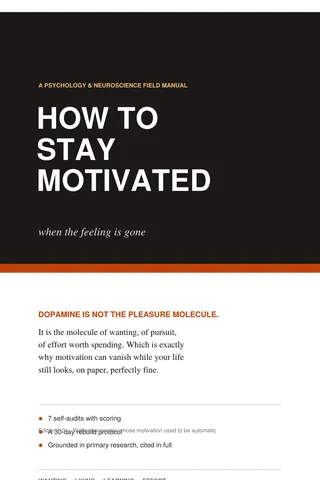
Motivation used to be automatic. Now you know exactly what to do and still cannot generate the pull. The catalog's deepest book: it separates wanting from liking, shows how the pursuit machinery fails while enjoyment stays intact, and spends 30 days feeding that machinery what it actually runs on.
Written for: People whose motivation used to be automatic and has gone quiet - who still know what they should be doing and still cannot generate the pull; routes two-week-plus loss of pleasure or energy to a clinician on p2 and again in ch9
- 17 chapters in 3 parts
- 7 scored audits
- 30-day protocol with tracker and day-30 review
- 4 field cards
- glossary
- grouped source list pp82-86 including contested-claim pairs
$29 · 86 pages · 64 citations · Ebook (print-and-write audits + 30-day tracker) · on the When Willpower Runs Out shelf
Inside the book — 8 pages. Tap one to read it.
 The Self-Compassion Workbook for Perfectionists
Quieting the inner critic and learning to speak to yourself the way you would speak to someone you love
The Self-Compassion Workbook for Perfectionists
Quieting the inner critic and learning to speak to yourself the way you would speak to someone you love
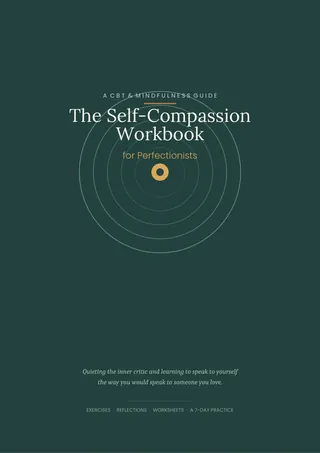
You hide unfinished work, replay mistakes for days, and never once feel you cleared the bar. This replaces the inner critic with a coach that is both kind and believable - without lowering a single one of your standards.
Written for: High-achieving perfectionists whose inner critic runs the show - hiding unfinished work, replaying mistakes for days, never feeling the bar was cleared
- 8 parts
- critic-mapping worksheet
- thinking-traps page
- compassionate thought record with a worked example
- self-compassion break
- RAIN practice
- translate-the-critic worksheet
- 7-day practice
- curated talks and books p20-21
$14 · 23 pages · 9 citations · Ebook (print-and-write worksheets) · on the When Willpower Runs Out shelf
Inside the book — 2 pages. Tap one to read it.
 The Somatic Reset
5-Minute Tools to Calm Your Nervous System
The Somatic Reset
5-Minute Tools to Calm Your Nervous System
Your mind knows the breathing exercises. Your body never got the memo. Five tools, each mapped to the nervous-system state it's built for, designed for the five minutes between meetings - not for a quiet room and twenty spare minutes you don't have.
Written for: Burned-out leaders, founders and high-performers whose minds know the breathing exercises but whose bodies never got the memo - written for the five minutes between meetings, not for a quiet room and twenty minutes
- 9 sections
- three-state map (ventral vagal / sympathetic / dorsal vagal)
- 5 tools each with best-for, time and why-it-works (physiological sigh, temperature shock, vagal hum, orienting, shake it out)
- if-you-feel / reach-for lookup table p10
- habit-stacking and practice-building page
- resources p11-12
$9 · 15 pages · 10 citations · Ebook (no worksheets) · on the When Willpower Runs Out shelf
Inside the book — 2 pages. Tap one to read it.
 Unhooked
How to Quit Something You're Hooked On - why variable rewards capture you, and why removing cues beats out-willing them
Unhooked
How to Quit Something You're Hooked On - why variable rewards capture you, and why removing cues beats out-willing them

You've tried to out-willpower it and lost. The fight was never against the substance or the app - it's against a learned prediction, which means the leverage is in the cues and the uncertainty, not in the moment of temptation. Remove them in order of leverage.
Written for: People trying to quit or cut down a behaviour or substance who have failed with willpower; physical dependence, co-occurring conditions and self-harm risk are routed to a clinician on p30 and flagged again on p2
- 12 chapters in 4 parts
- wanting-vs-liking and incentive-sensitisation primer
- variable-reinforcement chapter
- 6 audits (7-day honest log, five-channel cue inventory, variability score, friction audit, cost ledger, unmet-need)
- 7 ordered interventions
- urge surfing
- lapse-is-not-relapse chapter
- 14-day cue-removal sprint
- one-page protocol
- relapse autopsy sheet
- when-to-bring-in-a-professional p30
- chapter-grouped sources p31-32
$19 · 32 pages · 40 citations · Ebook (print-and-write audits + 14-day sprint) · on the When Willpower Runs Out shelf
Inside the book — 3 pages. Tap one to read it.
Social Confidence Library
Reading people, being read, staying in the room. 7 guides, $79 $108 as a shelf. Open the shelf →
 Reading People
Body Language, Behavior, and the Psychology of Human Signals
Reading People
Body Language, Behavior, and the Psychology of Human Signals
Most body-language advice turns readers into confident mind-readers who are confidently wrong. This teaches signals in clusters and in context, and spends as much time on what a cue does not mean as on what it does. Notice more; conclude less.
Written for: Everyday readers who want to notice more in conversations - work, negotiation, dating, friendship - without turning into confident mind-readers; explicitly not a diagnostic or lie-detection tool
- 17 chapters in 5 parts
- the four-step read (baseline, cluster, context, change)
- face, eyes, posture, hands, feet and voice chapters
- Big Five reading
- deception chapter
- myths-debunked chapter
- reader's code of ethics
- 30-day practice plan
- 3-page graded source appendix (Sources, Evidence & Limits)
$19 · 39 pages · 27 citations · Ebook (field manual + 30-day practice plan) · on the Social Confidence Library shelf
Inside the book — 3 pages. Tap one to read it.
 Social Intelligence for the Post-Isolated World
A Relatability Guide - The Reconnection Handbook
Social Intelligence for the Post-Isolated World
A Relatability Guide - The Reconnection Handbook

The awkwardness isn't your personality. It's disuse. A graded ladder of survivable social reps, a script for each rung, and tools that work on your body mid-conversation - for everyone who came out of years of low contact feeling rusty.
Written for: Adults who came out of a long stretch of low in-person contact feeling rusty, remote workers especially; closes by routing significant social anxiety to a licensed therapist
- 9 chapters
- social fitness ladder (7 rungs)
- the A.R.E. engine
- deepening staircase from facts to values
- graceful exits
- give-first networking
- physiological sigh and 3-3-3 outward anchor
- adult friendship formula
- remote worker playbook
- 30-day reconnection plan
- pocket cheat sheet
- 3-page graded source appendix (Where This Guide Gets Its Evidence)
$14 · 30 pages · 22 citations · Ebook (pocket cheat sheet + 30-day plan) · on the Social Confidence Library shelf
Inside the book — 2 pages. Tap one to read it.
 Social Confidence for Introverts
The Small Talk Scriptbook
Social Confidence for Introverts
The Small Talk Scriptbook
The hardest part is the first sentence. This hands it to you, pre-written: openers, deep-dive questions and clean exit lines for each setting you actually dread, so the blank slate stops being a blank slate.
Written for: Introverted professionals and students who feel awkward in social or networking settings and want the words pre-written
- 10 chapters
- 5-4-3-2-1 grounding script
- Open-Explore-Anchor structure
- openers for events, office, parties and online
- 50+ deep-dive questions
- five exit scripts
- low-energy networking tactics
- LinkedIn and email scripts
- 30-day blueprint
- master cheat sheet
- 2-page graded source appendix (Sources & Evidence Notes)
$14 · 16 pages · 18 citations · Ebook (tear-out scripts & cheat sheets) · on the Social Confidence Library shelf
Inside the book — 2 pages. Tap one to read it.
 The Social Battery Assessment
For introverts and the chronically overstimulated: diagnose exactly what drains you - and build a recovery system based on the research, not the cliches
The Social Battery Assessment
For introverts and the chronically overstimulated: diagnose exactly what drains you - and build a recovery system based on the research, not the cliches
You end an ordinary day empty, and the rest you take doesn't recharge you. Ten dimensions separate what actually drains you - stimulation, sensory load, format, masking - from the chargers that are broken, then match one technique to each leak.
Written for: Introverts and highly sensitive people who end ordinary social days empty, and whose recovery time does not actually recharge them
- 40-question, 10-dimension assessment
- battery radar map
- 5 named battery profiles
- 10 techniques with sources
- recovery menu and weekly energy budget worksheets
- 7-day energy tracker
- an honest page on when a professional beats a workbook
- source list p30
$19 · 30 pages · 18 citations · Ebook (print-and-write assessment + worksheets + 7-day tracker) · on the Social Confidence Library shelf
Inside the book — 2 pages. Tap one to read it.
 The Art of Socializing
A Complete Professional Guide to Building Genuine Connections and Living an Outgoing Life
The Art of Socializing
A Complete Professional Guide to Building Genuine Connections and Living an Outgoing Life
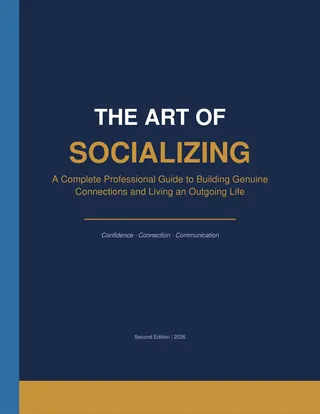
One end-to-end guide instead of nine single-topic ones: anxiety, small talk, listening, non-verbals, networking, and keeping the friendships you finally make. Built on the premise that you don't need to become someone else - your capacity is already there.
Written for: Introverted or socially anxious adults who want one end-to-end social guide rather than a single-topic book - from understanding anxiety through small talk, listening and non-verbals to networking and keeping the friendships they make
- 9 chapters
- social-comfort spectrum table
- FORD framework
- intimacy ladder (facts - opinions - feelings - values)
- four levels of listening
- non-verbal skills table
- where-to-meet-people guide
- give-first networking and the 48-hour rule
- relationship maintenance toolkit
- 30-day social challenge
- further reading + 6-researcher table p20
$14 · 22 pages · 14 citations · Ebook (reflection prompts, no worksheets) · on the Social Confidence Library shelf
Inside the book — 2 pages. Tap one to read it.
 Heard
The Science of Responsive Listening
Heard
The Science of Responsive Listening
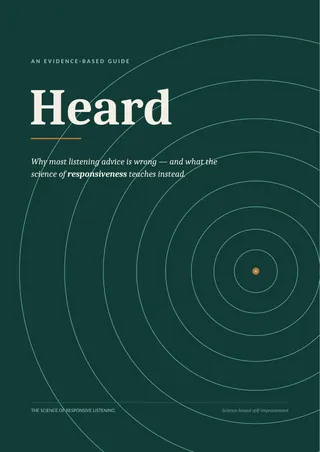
You did everything the listening advice said - nodded, paraphrased - and people still don't feel heard. Those techniques barely move the needle. What matters is perceived responsiveness: feeling understood, validated and cared for, measured in the other person, not in your technique.
Written for: People who have read the standard listening advice, applied it, and still leave others feeling unheard
- 5 parts
- 7-item self-check
- three one-week experiments
- single-page summary
- peer-reviewed reference list p13
$14 · 13 pages · 10 citations · Ebook (self-check + three experiments) · on the Social Confidence Library shelf
Inside the book — 2 pages. Tap one to read it.
 How to Make Friends as an Adult
What the research actually says about building real connection after the easy years end
How to Make Friends as an Adult
What the research actually says about building real connection after the easy years end
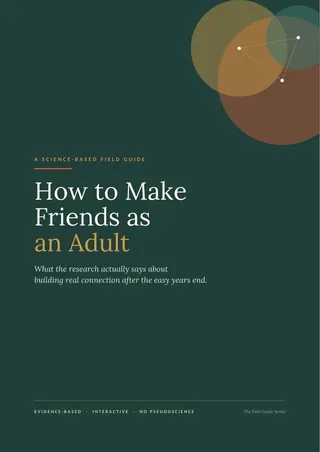
The scaffolding is gone and you privately suspect the problem is you. It's logistics, not personality: proximity, repetition, accumulated hours, gradual disclosure, and being the one who goes first. Turned into a six-week plan with steps you tick off in the file.
Written for: Adults who lost the school-and-early-jobs scaffolding and privately suspect the problem is them
- 9 chapters
- the liking gap
- mere exposure
- Hall's 40-60 / 80-100 / 200-hour ladder
- the intimacy loop
- the reach-out effect
- six-week plan with live checkboxes p16
- a 'what the science does not say' chapter p18
- 14-source list p20
$14 · 20 pages · 14 citations · Interactive workbook (fillable) - 9 live checkboxes + 2 write-in fields · on the Social Confidence Library shelf
Inside the book — 2 pages. Tap one to read it.
Secure Love
What long relationships actually run on. 7 guides, $85 $123 as a shelf. Open the shelf →
 Arguments to Answers
Conflict Scripts for Couples - Cheat-Sheet Edition
Arguments to Answers
Conflict Scripts for Couples - Cheat-Sheet Edition

You love each other and you keep having the exact same fight. 50+ word-for-word lines organised by the moment you're actually in - spiralling, opening a hard talk, feeling attacked, calling a timeout, repairing - so you never have to improvise mid-argument again. Includes a cut-out fridge card.
Written for: Couples who love each other but keep having the same fight, and want exact words in the moment rather than theory
- 8 sections
- 50+ numbered scripts each with a USE WHEN trigger
- phrases-to-retire table p39
- 20-second reset fridge card p40
- source list p42
$19 · 42 pages · 7 citations · Ebook (script field guide + cut-out fridge card) · on the Secure Love shelf
Inside the book — 4 pages. Tap one to read it.
 How to Become More Securely Attached
Attachment styles shift with experience - the honest version
How to Become More Securely Attached
Attachment styles shift with experience - the honest version
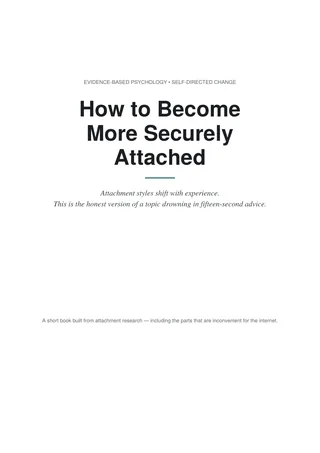
Attachment styles genuinely shift with experience - this is the honest version of how. Two dials instead of four boxes, what each strategy is actually trying to protect, and three skills - catching activation, the honest bid, repair - adapted to the way you lean.
Written for: Adults who recognise themselves in anxious or avoidant patterns and want the research-grade version rather than fifteen-second advice
- 15 chapters in 4 parts
- rough self-location scale
- per-lean chapters (anxious, avoidant, both)
- doing-it-while-single chapter
- when-to-see-a-professional chapter
- nine myths section
- sources p38-40
$19 · 40 pages · 37 citations · Ebook (print-and-write self-location + behavioural experiments) · on the Secure Love shelf
Inside the book — 3 pages. Tap one to read it.
 The Open Relationship Starter Kit
Rules, Boundaries & Communication for Ethical Non-Monogamy
The Open Relationship Starter Kit
Rules, Boundaries & Communication for Ethical Non-Monogamy
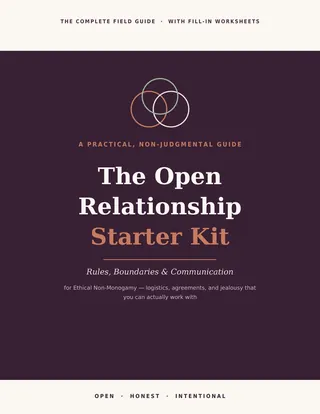
Structure and language, not persuasion. Turn a vague intention into concrete agreements: the difference between rules, boundaries and agreements, how to have the opening conversation, and jealousy read as information rather than failure. Six worksheets to fill in together.
Written for: Couples considering or newly opening a relationship who want structure and language rather than persuasion
- 9 chapters in 4 parts
- the rules/boundaries/agreements distinction
- jealousy toolkit
- 6 worksheets p29-34 (values, boundaries, safer-sex agreement, jealousy tracker, weekly check-in, new-connection protocol)
- resources page p36-37
$19 · 37 pages · 7 citations · Ebook + 6 print-and-write worksheets · on the Secure Love shelf
Inside the book — 3 pages. Tap one to read it.
 From Partners to Parents
The 10-Minute Connection Method
From Partners to Parents
The 10-Minute Connection Method

You still love each other. You've also become an extremely efficient household team. That drift is structural, not personal - a baby makes it so. Fifteen ten-minute habits and a four-week plan to get back to being a couple.
Written for: New parents who still love each other but have become an efficient household team rather than a couple
- 5 parts
- 10-item self check-in with scoring bands
- 15 habits in 5 categories
- 4-week plan
- mental-load, intimacy and fighting-fair sections
- weekly huddle and 7-day tracker worksheets p22-23
- evidence page p24-26 opening with a three-numbers correction box
$14 · 26 pages · 17 citations · Ebook (print-and-write check-in + huddle and tracker worksheets) · on the Secure Love shelf
Inside the book — 2 pages. Tap one to read it.
 The 20-Minute Door
How to stop stonewalling - or live well with someone who does
The 20-Minute Door
How to stop stonewalling - or live well with someone who does
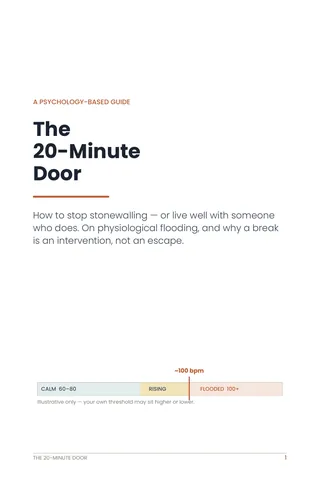
You shut down mid-argument and hate yourself afterwards. Or you live with someone who does. This separates the behaviour everyone sees from the flooding you feel inside, then turns the break into an eleven-line protocol you agree on in peacetime - so it's a break, not an escape.
Written for: People who shut down mid-argument and hate themselves for it afterwards, and the partners who live with someone who does
- 18 chapters in 5 parts
- 4 self-audits p7, p17, p23-24
- the eleven-line break protocol
- pursue-withdraw and softened start-up chapters
- a separate chapter on silence used as control
- 8-week plan p36
- cut-out fridge card p37
- graded source list p38-40
$19 · 40 pages · 29 citations · Ebook (print-and-write audits + 8-week plan + cut-out fridge card) · on the Secure Love shelf
Inside the book — 3 pages. Tap one to read it.
 The Small Moments That Decide Everything
Bids for connection, turning toward, and the quiet daily math of whether a relationship lasts
The Small Moments That Decide Everything
Bids for connection, turning toward, and the quiet daily math of whether a relationship lasts
Not in crisis, but you can feel the drift. This takes the famous bids-for-connection research, says plainly which parts of it are oversold, rebuilds it on sturdier ground - and reduces the whole thing to what you do in the two seconds after someone reaches for you.
Written for: Partners who are not in crisis but can feel the drift, and want the mechanism instead of fifteen-second advice
- 6 chapters
- the three doors (toward / away / against)
- an explicit takedown of the 86% and 90-94% divorce-prediction figures
- the emotional bank account
- Gable's four good-news response styles
- repair and gratitude sections
- three reflection questions and a 7-day noticing table p19
- 10-source list p22-23
$14 · 23 pages · 10 citations · Ebook (3 reflection questions + 7-day noticing log) · on the Secure Love shelf
Inside the book — 2 pages. Tap one to read it.
 Why You Pull Away When Things Get Good
Understanding avoidant deactivation - the quiet, automatic exit you take right when closeness starts to work
Why You Pull Away When Things Get Good
Understanding avoidant deactivation - the quiet, automatic exit you take right when closeness starts to work
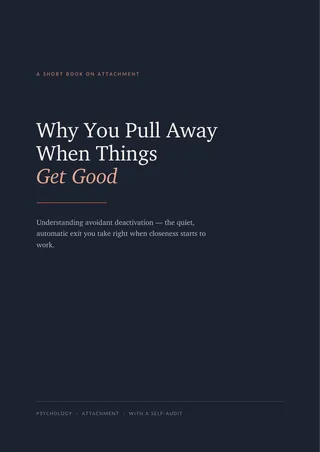
Things get good and you go cold. It isn't coldness - it's an effortful, automatic strategy, and being loved well is the trigger. Here's the ninety-second window where you can catch it happening, and the exact words to use inside it.
Written for: People who lose interest exactly when a relationship starts working, plus the partner trying to understand it
- 11 chapters
- Bowlby's defensive exclusion
- suppression physiology after Gross
- the seven exits
- 28-question audit in four scored sections p14-17
- the why-good-is-the-trigger chapter
- catching it live
- scripts
- a chapter for the partner
- earned security
- references p29-30
$19 · 31 pages · 25 citations · Ebook (print-and-write 28-question audit + prompts) · on the Secure Love shelf
Inside the book — 2 pages. Tap one to read it.
Hard Conversations & Boundaries
From the physiology of anger to the exact sentence. 4 guides, $54 $71 as a shelf. Open the shelf →
 How to Have a Difficult Conversation
Anger physiology, timing, and what de-escalation really requires
How to Have a Difficult Conversation
Anger physiology, timing, and what de-escalation really requires
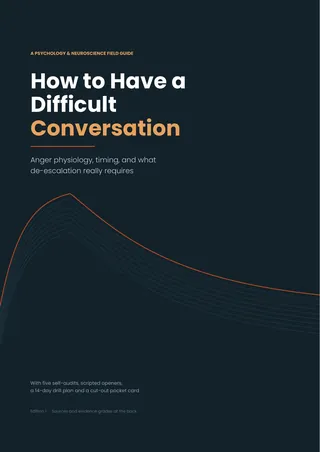
The conversation you keep rehearsing in the shower and never having. This treats it as three stacked problems - your body, your timing, your words - and explains the physiology behind why each fix works, so you stop blaming yourself for going blank.
Written for: People facing hard conversations with someone fundamentally safe - partner, colleague, manager, sibling, friend
- 15 chapters in 3 parts
- 5 self-audits
- scripted openers
- 14-day drill plan
- cut-out pocket card
- source list p39
$19 · 40 pages · 47 citations · Ebook (print-and-write audits) · on the Hard Conversations & Boundaries shelf
Inside the book — 4 pages. Tap one to read it.
 Boundaries Without Guilt
The Say-No Handbook
Boundaries Without Guilt
The Say-No Handbook

You can already say no. It's the four hours of guilt afterwards that make you stop. Word-for-word scripts for 19 real situations, each paired with a rebuttal for the pushback you will actually get - so the no holds, and you don't apologise it away.
Written for: People who can already say no but cannot survive the guilt afterwards - trained to be endlessly available by family, bosses and one-sided friends
- 5 parts
- 19 scripted scenarios
- an if-they-push rebuttal for each
- the three core techniques (broken record, delay, warm no)
- F.O.G. guilt-trip decoder
- pocket cheat sheet p23-24
- graded source list p26-27
$14 · 27 pages · 6 citations · Ebook (tear-out cheat sheet) · on the Hard Conversations & Boundaries shelf
Inside the book — 2 pages. Tap one to read it.
 The Boundary Script Book
What to Say in 50 Difficult Situations
The Boundary Script Book
What to Say in 50 Difficult Situations
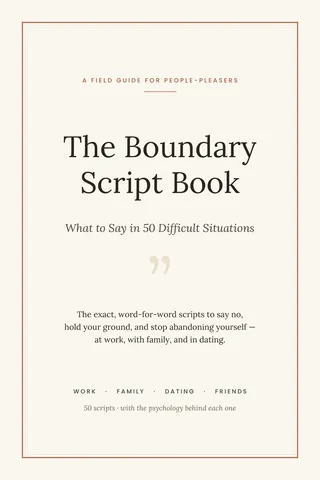
You know what you want to say. You freeze anyway. Fifty word-for-word scripts for fifty real situations - each with the psychology of why that particular one hooks you, in a warmer version, a firmer version, and one for when they push back.
Written for: Chronic people-pleasers who already know what they want to say and freeze in the moment - at work, with family, in dating and with friends
- 40+ scripted situations across work, family and dating, each with THE PSYCHOLOGY, SAY THIS and gentle/firm/final tiers
- broken-record and de-escalation sections
- graded source list p67-69
$24 · 69 pages · 7 citations · Ebook (script field guide, no worksheets) · on the Hard Conversations & Boundaries shelf
Inside the book — 6 pages. Tap one to read it.
 Setting Boundaries with In-Laws
The Parenting Edition
Setting Boundaries with In-Laws
The Parenting Edition
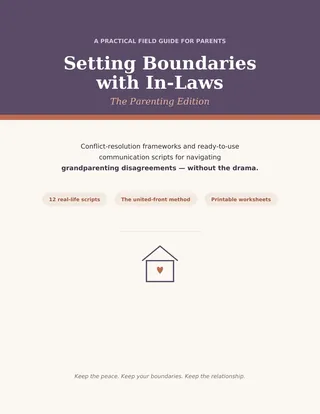
Food, screens, discipline, safety, photos - the same low-grade friction every week, with people you don't want to lose. A boundary is what you will do, not what they must do. Twelve flashpoint scripts in three escalating tiers, plus the united-front rule: whoever's parent it is does the talking.
Written for: Parents in low-grade ongoing conflict with grandparents over food, screens, discipline, safety and photos, where the relationship is worth keeping
- 6 parts
- three hidden drivers of conflict
- request vs rule vs boundary table
- P.A.U.S.E. method
- 12 scripts each with instead-of-saying, gentle / firm / final line, why it works and a push-back reply
- broken-record and de-escalation section
- 3 worksheets p27-29
- quick-reference card p30
- graded source list p31-32
$14 · 32 pages · 6 citations · Ebook (print-and-write worksheets + quick-reference card) · on the Hard Conversations & Boundaries shelf
Inside the book — 3 pages. Tap one to read it.
Healing the Family Wound
The relationship you did not choose. 4 guides, $54 $71 as a shelf. Open the shelf →
 Good Enough
Letting Go of the Parents You Wish You'd Had
Good Enough
Letting Go of the Parents You Wish You'd Had

Your parent is alive, and the one you needed never arrived. This separates the parent who exists from the parent you kept hoping for, gives you permission to grieve someone still living, and argues that acceptance - not forgiveness - is what actually sets you free.
Written for: Adults with a living but emotionally absent or difficult parent, still caught between contact and cutoff
- 9 chapters in 3 parts plus intro and closing letter
- a reflection prompt at the end of most chapters
- unsent-letter and keep/end-list practices
- sources page p32-33
$19 · 33 pages · 10 citations · Ebook (reflection prompts, no worksheets) · on the Healing the Family Wound shelf
Inside the book — 3 pages. Tap one to read it.
 The Parent Wound
Healing the Relationship That Shaped You
The Parent Wound
Healing the Relationship That Shaped You
You feel your shoulders rise when their name lights up your phone. A gentle, staged path - naming the wound, seeing how it shows up in your adult life, grieving what never arrived, boundaries, reparenting, forgiveness on your own terms - ending in an honest look at what contact is possible now.
Written for: Adults who feel the tightness when a parent calls and want a gentle staged path rather than a clinical one
- 10 chapters
- the roles children adapt into
- familiar adult patterns
- grief chapter
- breaking the cycle
- boundaries chapter
- reparenting practices
- forgiveness-or-release distinction
- closing letter
- videos and resources page p31
- graded source list p32-34
$14 · 34 pages · 12 citations · Ebook (reflection prompts, no worksheets) · on the Healing the Family Wound shelf
Inside the book — 3 pages. Tap one to read it.
 When Family Hurts
Recognizing, Surviving, and Healing from Toxic Relatives
When Family Hurts
Recognizing, Surviving, and Healing from Toxic Relatives
You're trying to work out how much contact you can survive. What the harm actually is, six archetypes of family damage, why leaving is so hard - then boundaries that hold, the exact wording, the full low-contact to no-contact spectrum, and what life looks like on the other side.
Written for: Adults deciding how much contact to keep with a relative who keeps causing harm
- 12 chapters in 4 parts plus closing
- signs checklist
- six harm archetypes
- boundary scripts and broken-record lines
- low-contact / no-contact chapter
- grief and chosen-family chapters
- holiday and milestone lines
- resources and further help p34
- graded source list p36-38
$14 · 38 pages · 10 citations · Ebook (script field guide, no worksheets) · on the Healing the Family Wound shelf
Inside the book — 3 pages. Tap one to read it.
 Reparenting Yourself
Making Peace With the Childhood You Got
Reparenting Yourself
Making Peace With the Childhood You Got
Your childhood wasn't 'that bad' and something still went unmet. Four pillars build the steady inner parent - soothing, nurturing, structure, encouragement - then work through the grief, the apology that is never coming, and the rules you inherited. Closes with a 30-day daily practice.
Written for: Adults who had a 'not that bad' childhood that still left something unmet, and who want a self-directed practice rather than a trauma book
- 12 chapters in 3 parts
- Winnicott 'good enough' chapter
- four pillar chapters
- grief, end-the-wait and rewriting-inherited-rules chapters
- closing letter
- Thirty Days of Reparenting daily prompts p47-49
- graded source list p50-53
$24 · 54 pages · 22 citations · Ebook (reflection prompts + 30-day daily companion) · on the Healing the Family Wound shelf
Inside the book — 5 pages. Tap one to read it.
Design Your Life
Two audits and one hard decision. 3 guides, $45 $57 as a shelf. Open the shelf →
 The Life Goal Audit
A self-guided workbook - reflect, track, discover, design
The Life Goal Audit
A self-guided workbook - reflect, track, discover, design

You're busy, you're functional, and you cannot say what you're aiming at. This audits a life the way an accountant audits a balance sheet - score eight domains, count the progress you've already made, excavate the goal hiding underneath the goals, then cut it into the next 90 days.
Written for: People who are functional and busy but cannot name what they are aiming at - and who suspect the goal is already there, unstated
- 4 parts
- Wheel of Life
- deep-dive scorecard
- energy audit
- wins inventory
- progress tracker
- momentum map
- values excavation
- ikigai overlap
- 80th birthday letter
- North Star & 5 Whys
- 90-day breakdown
- monthly re-audit
- commitment contract
- graded source list p26-27
$14 · 27 pages · 10 citations · Workbook (print-and-write, full-page templates) · on the Design Your Life shelf
Inside the book — 2 pages. Tap one to read it.
 The Regret-Proof Decision
Choice overload, prediction errors about future feelings, and how to outsmart both
The Regret-Proof Decision
Choice overload, prediction errors about future feelings, and how to outsmart both
The job, the move, the relationship - you keep researching and cannot close. Two quiet failures are doing it: too many options, and a broken forecast of how you'll feel later. Seven audits attack both, across 185 fillable fields you complete in the file.
Written for: Overthinkers and maximizers stuck on a real decision - job, move, relationship - who keep researching and cannot close
- 8 chapters in 3 parts
- 7 fill-in audits (maximizer test, forecast log, regret autopsy, criteria card, pre-mortem, one-page decision audit, decision journal)
- tear-out cheat sheet
- sources p33-34
$29 · 35 pages · 54 citations · Interactive workbook (fillable) · on the Design Your Life shelf
Inside the book — 3 pages. Tap one to read it.
 The Quarterly Life Audit Workbook
Eight life pillars. Ninety days. One honest instrument check.
The Quarterly Life Audit Workbook
Eight life pillars. Ninety days. One honest instrument check.
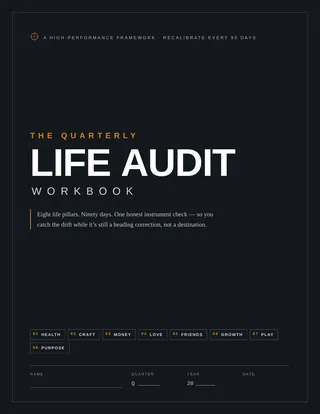
Your life looks fine on paper and has quietly drifted anyway. Drift is measurable: the gap between the life you'd choose and the one you get by default. Score eight pillars against last quarter's numbers instead of against a feeling - every 90 days, for good.
Written for: People whose life looks fine on paper and has quietly drifted anyway - and who want a repeating instrument rather than one more burst of reflection
- 8 pillars, each with 2-and-10 anchors, 3 questions, a 1-10 score, last-Q / this-Q / drift delta, working-vs-draining columns and one keystone move
- 5-move method page
- 90-day warm-up reflection
- drift gauge radar with last-vs-now table
- priority matrix (fix first / invest / easy wins / defer)
- 3 focus commitments with metrics and recovery plans
- signed contract
- annual four-quarter tracker
$14 · 18 pages · 6 citations · Workbook (print-and-write, score-and-plot) · on the Design Your Life shelf
Inside the book — 2 pages. Tap one to read it.
Modern Dating
Profile, opening line, first date. 3 guides, $37 $47 as a shelf. Open the shelf →
 Build a Dating Profile That Gets Replies
The Photos, the Words, and the Strategy
Build a Dating Profile That Gets Replies
The Photos, the Words, and the Strategy
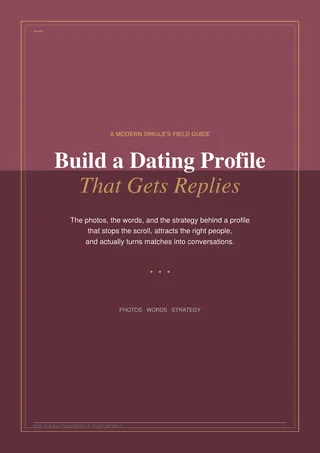
Matches but no conversations - or no matches at all. This rebuilds the profile in the order that actually decides outcomes: strategy first, then photos, then words, then per-app tuning, finishing with a pre-launch audit before you go live.
Written for: Single adults on dating apps whose profile is getting matches but not conversations, or no matches at all
- 13 chapters in 4 parts
- photo hierarchy and main-photo checklist
- phrases to cut
- per-app tuning notes
- pre-launch audit p33
- method note p35
$14 · 35 pages · 2 citations · Ebook (checklists + pre-launch audit) · on the Modern Dating shelf
Inside the book — 3 pages. Tap one to read it.
 From Match to First Date
How to Text, Flirt, and Actually Meet Up
From Match to First Date
How to Text, Flirt, and Actually Meet Up

You match easily and watch it die in the messages. This covers the exact stretch where modern dating fails - the opener, the momentum, the texting rhythm, the flirtation, reading real interest, and the ask - and then helps you plan the date itself.
Written for: Single adults who match easily but watch conversations die before a date is ever arranged
- 13 chapters in 4 parts
- opener examples
- texting rhythm guide
- flirting boundaries
- interest-reading signals
- the ask
- first-date planning
- pre-date playbook
- method note p35
$14 · 35 pages · 2 citations · Ebook (checklists + pre-date playbook) · on the Modern Dating shelf
Inside the book — 3 pages. Tap one to read it.
 The Art of the Opening Line
A Modern Single's Guide to Meaningful Conversation
The Art of the Opening Line
A Modern Single's Guide to Meaningful Conversation
Openers built from the mindset underneath them, not from lines: read the room, aim for one pleasant moment, then let disclosure deepen gradually. Backed by a vault of 120 starters for apps, real life and first dates, plus a four-week practice plan.
Written for: Singles who freeze on the first message or the first thirty seconds in person
- 13 chapters in 5 parts
- digital and real-world openers
- first-date topics that travel
- compatibility questions
- topics to handle with care
- reading signals and moving on
- recovering from awkward moments
- 120-starter vault p33-36
- 4-week practice plan p37-38
- graded source list p40-42
$19 · 42 pages · 11 citations · Ebook (120-starter vault + 4-week practice plan) · on the Modern Dating shelf
Inside the book — 3 pages. Tap one to read it.
On no shelf
In the whole library, but not in any of the eight sets.
 EQ for the Modern Manager
Emotional Intelligence in Remote Teams
EQ for the Modern Manager
Emotional Intelligence in Remote Teams
Leading through a screen stripped away every ambient signal you used to read in a room. This rebuilds the four EQ domains for a low-bandwidth channel: which cues survive video and text, how to read them without over-diagnosing, and how to make psychological safety real when nobody shares an office.
Written for: Managers of distributed or hybrid teams who lead through a screen and have lost the ambient signals they used to read in a room
- 4 parts, 10 chapters
- digital-cue field guide p11
- safety sentence-starters p17
- remote EQ operating system
- first-30-days plan
- self-assessment toolkit
- quick-reference cards
- reading and watch list p25-26
$19 · 27 pages · 9 citations · Ebook (print-and-write self-assessment) · on the Only in the whole library shelf
Inside the book — 2 pages. Tap one to read it.
 Emotional Intelligence for Difficult Conversations
Handling conflict, friction, and hard truths without slipping into guilt or anger
Emotional Intelligence for Difficult Conversations
Handling conflict, friction, and hard truths without slipping into guilt or anger
Regulate yourself first. Then say the hard thing. Four clear steps - observation, feeling, need, request - with separate playbooks for managers, couples and individuals, so the hard truth lands without tipping into guilt or anger.
Written for: Anyone facing ordinary friction with someone of goodwill - managers, couples, individuals; explicitly excludes abusive or unsafe situations and routes them to a professional on p2
- 15 chapters in 5 parts
- NVC four-step spine
- de-escalation moves
- playbooks for managers, couples and individuals
- one-page field guide p24
- graded source list p25-26
$19 · 26 pages · 12 citations · Ebook (tear-out field guide) · on the Only in the whole library shelf
Inside the book — 2 pages. Tap one to read it.
 The Follow-Through Formula
Why you dream big but do nothing - and the research-backed system to diagnose your personal procrastination profile and fix it
The Follow-Through Formula
Why you dream big but do nothing - and the research-backed system to diagnose your personal procrastination profile and fix it
You dream big and do nothing, and you've already tried discipline. Eight research-backed drivers produce procrastination; this diagnoses which one is actually yours, then gives you the single technique matched to that driver instead of generic advice.
Written for: People who set goals and never start, and who have already tried and failed with discipline-based advice
- 32-question, 8-dimension assessment
- scoring table
- radar profile map
- dimension-to-technique mapping
- 8 techniques each with its study
- 7-day follow-through tracker
- source list p22
$14 · 22 pages · 17 citations · Ebook (print-and-write assessment + 7-day tracker) · on the Only in the whole library shelf
Inside the book — 2 pages. Tap one to read it.
 The Adult Friendship Playbook
Finding & keeping deep connection in an age of digital isolation and post-grad loneliness
The Adult Friendship Playbook
Finding & keeping deep connection in an age of digital isolation and post-grad loneliness
Everyone scattered, the circle shrank, and you quietly decided it was a personal failing. It isn't. School handed you proximity, repetition and unguarded time; adulthood removed all three. Here's how to rebuild each one on purpose.
Written for: Twenty- and thirty-somethings who moved, drifted, or stayed put while everyone scattered - and privately suspect the shrinking circle is a personal failing
- 7 chapters + 30-day starter plan
- the three lost ingredients
- the disappearing third place
- Shasta Nelson's positivity / consistency / vulnerability model
- Jeffrey Hall's 50-90-200 hour thresholds table
- Marisa Franco's acceptance mindset with four story-vs-truth reframes
- 5 deepening moves
- consistency and repair chapter
- a chapter on drift, rejection and grief
- 7 books p12
- 5 talks with URLs p13
$14 · 15 pages · 10 citations · Ebook (no worksheets) · on the Only in the whole library shelf
Inside the book — 2 pages. Tap one to read it.
 Reparenting Yourself
Making Peace With the Childhood You Got
Reparenting Yourself
Making Peace With the Childhood You Got
The adaptations that kept you safe as a child are still running, and they're expensive now. Four pillars - nurturing, protection, guidance, play - walk you from understanding the childhood you actually got, through the core practices, the grief, and the inevitable setbacks.
Written for: Adults carrying childhood adaptations into adult life who want a structured self-directed practice
- 12 chapters in 3 parts
- inner child and inner critic chapter
- four pillar chapters each with a practice
- letter-to-younger-self and steadying-plan practices
- resources page p33-34
- graded source list p36-38
$19 · 38 pages · 20 citations · Ebook (reflection and practice prompts) · on the Only in the whole library shelf
Inside the book — 3 pages. Tap one to read it.